
Gardening With Lean Soils

Designing Sustainable Landscapes from the Ground Up
A Landscape Designer's Perspective

Most gardeners are taught to improve their soil before they plant. Add compost. Add mulch. Add fertility. Make the soil richer, darker, softer, and more generous.
That advice is often useful, especially in vegetable gardens or heavily disturbed urban soils. But in ornamental landscape design, there is another possibility worth considering: what if the existing soil is not simply a problem to fix? What if it is one of the most important clues to the kind of garden that belongs there? This is where lean soils become interesting.
By “lean soil,” I mean soil that is relatively low in fertility, often fast-draining, and sometimes sandy, gravelly, rocky, or shallow. Lean soil is not necessarily bad soil. It is soil with a particular character. It may not support every plant, but it can support beautiful, resilient, low-input gardens when the design begins with the site rather than fighting against it.
For me, this is both a practical and philosophical issue. A garden should not feel as though it has been dropped onto a place from somewhere else. It should feel rooted in its soil, climate, light, drainage, and setting. In landscape design, this is part of what creates a sense of place.
Lean Soil Is Not “Poor” Soil
I try to avoid calling these soils “poor.” Poor suggests failure. Lean suggests restraint, clarity, and a different kind of abundance.
A lean soil may be sandy, like many seaside and island gardens. It may be gravelly from glacial till. It may be sharply drained on a slope. It may be thin over rock, or low in organic matter because of construction disturbance or natural site conditions.
In my own gardens, I see this contrast clearly. On Camano Island, my garden soil is extremely sandy in places, almost beach-like. It drains quickly and does not hold nutrients the way a rich loam would. In Seattle, my garden is sandy loam, which is more forgiving but still not the deep, moisture-retentive garden soil people often imagine when they think of “good” soil.
These soils require different decisions. But they do not automatically require correction.
Instead of asking, “How do I make this soil richer?” I often start with a different question: “What kind of garden would naturally thrive here?” That shift changes everything.
The Right Plant in the Right Place
“Right plant, right place” is one of the simplest ideas in horticulture, but it is also one of the most powerful. When we choose plants that match the soil, light, moisture, and climate of a site, we reduce the amount of forcing the garden requires.
In a lean, well-drained soil, that may mean choosing plants that are adapted to lower fertility and summer dryness. Many Mediterranean plants, prairie plants, coastal plants, and some Pacific Northwest natives are at their best in soils that are not overly rich. Give them too much fertility or too much summer water, and they can become floppy, short-lived, disease-prone, or simply less graceful.
This is especially important in the Pacific Northwest, where our climate gives us wet winters and increasingly dry summers. A plant may need good drainage in winter, some irrigation while it is establishing, and the ability to tolerate dry conditions later. Lean soils can be an asset in this situation because they often drain freely during our wet season.
Of course, not every lean soil is the same. Sandy soil, gravelly soil, compacted construction soil, and shallow rocky soil all behave differently. A good planting design still depends on observation. How fast does the soil drain? Is it acidic or alkaline? Is the site sunny, shady, windy, salty, or exposed? Has the soil been compacted by construction? Does water run through it or across it?
Lean soil is a starting point, not a single recipe.

Why Work With Lean Soil?
There are several benefits to designing with lean soil instead of automatically trying to transform it.
1. The Garden Can Be More Sustainable
When plants are well matched to the site, they usually need fewer inputs over time. That can mean less irrigation once established, less fertilizer, less soil hauling, and fewer attempts to rescue plants that were never suited to the conditions in the first place.
This does not mean doing nothing. New plantings still need care. Even drought-tolerant plants need consistent water during establishment. Mulch may still be useful. Compost may still have a role, especially where soil has been heavily disturbed.
But the goal is not to build an artificially rich planting bed that requires constant support. The goal is to create a plant community that can settle into the conditions of the site.
2. Lean Soil Can Create Stronger Plant Form
Many plants that evolved in lower-fertility soils develop better structure when they are not overfed. Their growth may be tighter, more durable, and better proportioned. Lavender, thyme, rockrose, many ornamental grasses, some salvias, yarrow, and manzanitas are good examples.
In rich soil, some of these plants may grow too quickly, split open, or become less long-lived. In leaner soils, they often show the quiet discipline that makes them beautiful.
3. Lean Soil Can Restrain the Thugs
Lean soil can also be useful as a gentle restraint on plants that are beautiful but a little rambunctious. Some perennials spread more quickly, seed around more freely, or overwhelm their neighbors when they are given rich soil, regular water, and too much encouragement. In leaner conditions, these same plants may still thrive, but with less excess. This is not a way to manage truly invasive plants, which should be avoided, but it can help keep vigorous garden plants in better proportion with the rest of the planting.
Lean soil can discourage this aggressive growth while still giving the plant a chance to shine.
Supports a Sense of Place
A Pacific Northwest garden does not need to imitate England, Provence, or any other borrowed landscape tradition. Its beauty can come from belonging to this region: its climate, soils, plants, and light.
On a sandy island site, the soil, wind, salt air, drainage, and summer dryness all influence the design. On a Seattle lot with sandy loam, the planting can be more layered, but the same principle applies: the garden should grow out of its conditions.
This is one of the reasons I find lean soils so compelling. They ask for restraint, but they do not require austerity. With the right plants, lean soils can create lush gardens that feel generous and alive, with a beauty shaped by adaptation, texture, and place.
A lean-soil garden might include silver foliage, evergreen structure, low mounds, fine grasses, small trees, tough shrubs, flowering perennials, and groundcovers that knit the planting together. It might feel coastal, woodland-edge, meadow-like, Mediterranean, or modern, depending on the site and the architecture.
The point is not to imitate a style. The point is to listen to the ground.
When Should You Amend Lean Soil?
Working with lean soil does not mean refusing all amendments. It means amending with a purpose. (Remember that article focuses on ornamental plants, not vegetables, which have very different nutritional needs.)
Compost can improve water retention and nutrient-holding capacity, especially in sandy soils. Mulch can moderate soil temperature, reduce weeds, and help conserve moisture. In compacted or construction-damaged soils, loosening, aeration, and organic matter may be necessary before planting.
But there is a difference between supporting soil function and trying to turn every planting area into the same rich garden bed.
For lean-soil planting, I often think in terms of targeted improvement rather than blanket transformation. For example:
Add compost where soil is severely depleted or compacted.
Avoid over-amending around plants that prefer lean, well-drained conditions.
Use mineral mulch, gravel, or coarse organic mulch where appropriate to support drainage and reduce weed pressure.
Group plants by water needs so irrigation can be reduced over time.
Choose plants for the soil you have, not the soil you wish you had.
This is especially important in gardens where the design goal is long-term resilience rather than quick lushness.
Plant Examples for Lean Soil Gardens
Plant selection always depends on the exact site, but the following plants can be useful starting points for lean, sandy, gravelly, or well-drained soils in Pacific Northwest gardens. Some are native, some are non-native, and all should be matched carefully to light, moisture, and exposure.

Small Trees and Large Shrubs
Vine maple | Acer circinatum
A beautiful Pacific Northwest native for part shade to open shade, vine maple brings structure, fall color, and a woodland feeling without becoming a huge tree. In a medium garden, it can act as a small multi-stemmed tree or large shrub. It is especially useful where the design needs softness and seasonal change.
Serviceberry | Amelanchier alnifolia
Serviceberry offers spring flowers, edible berries, fall color, and wildlife value. It is adaptable and can work well in naturalistic or more refined plantings. In leaner soils, it is best used where it will not be exposed to extreme drought without establishment care.
Strawberry tree | Arbutus unedo
A non-native evergreen tree with handsome bark, flowers, and fruit, strawberry tree can be a good choice for sunny, well-drained sites where a medium-scale evergreen structure is needed. It pairs well with Mediterranean and coastal planting palettes.
Shrubs
Evergreen huckleberry | Vaccinium ovatum
This native evergreen shrub is excellent for part shade and acidic soils. It brings glossy foliage, delicate flowers, berries, and a quietly Northwest character. It is not the right plant for every dry site, but in the right soil and exposure it can be one of the most useful shrubs in a regional planting palette.
Red-flowering currant | Ribes sanguineum
A native shrub with early spring flowers that support hummingbirds and pollinators, red-flowering currant is a strong candidate for sunny to partly shaded lean-soil gardens. It has a loose, natural habit that works well in wildlife-friendly and informal plantings.
California lilac | Ceanothus spp.
Ceanothus often looks best and lives longer in lean, well-drained soil, where it holds a firmer, more natural form. Because it fixes nitrogen, it needs little fertility and no fuss once established.
Lavender | Lavandula spp.
Lavender is a classic example of a plant that often prefers lean, well-drained soil. It dislikes heavy, wet conditions and excessive fertility. In sunny gardens, it can bring fragrance, pollinator value, and a crisp, architectural quality.
Perennials
Yarrow | Achillea millefolium
Yarrow is tough, drought-tolerant once established, and useful for pollinators. Its flat flower clusters contrast beautifully with grasses, fine foliage, and rounded shrubs. It works especially well in meadow-inspired or naturalistic plantings.
Penstemon | Penstemon spp.
Many penstemons appreciate good drainage and leaner conditions. They bring tubular flowers that are attractive to hummingbirds and other pollinators. The exact species or cultivar matters, so selection should be matched to the site.
Salvia | Salvia spp.
Ornamental salvias can be excellent in sunny, well-drained gardens. They provide long bloom, aromatic foliage, and strong pollinator appeal. They are especially useful where the design needs color without a high-water, high-fertility planting approach.
Oregon sunshine | woolly sunflower | Eriophyllum lanatum
A lovely native example for sunny, dry, well-drained sites. It naturally grows in dry sandy, grassy, or rocky places, and is especially good for that low, silver-leaved, sun-baked meadow look.
Common camas | Camassia quamash,
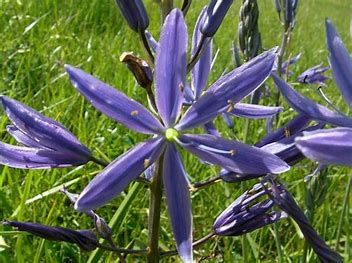
This Northwest native bulb shows that lean soil can still be generous. It grows beautifully in unamended, meadow-like soils, bringing a wash of blue in spring without needing rich compost, fertilizer, or constant improvement.
Groundcovers
Kinnikinnick | Arctostaphylos uva-ursi
A native evergreen groundcover for sunny, well-drained sites, kinnikinnick is especially useful in sandy or gravelly soils. It has small glossy leaves, spring flowers, and red berries. It needs careful establishment, but once settled it can create a beautiful low mat.
Beach strawberry | Fragaria chiloensis
Beach strawberry is a natural fit for coastal and sandy conditions. It spreads to form a low, green carpet and can be useful where a softer ground layer is needed. It is especially appealing in gardens that want to feel connected to the shore.
Woolly thyme | Thymus pseudolanuginosus
A non-native groundcover for sunny, sharply drained places, woolly thyme works well between stones, along edges, or in small-scale plantings where low texture is important. It is best where foot traffic is light and drainage is good.
Designing With Lean Soil
A successful lean-soil garden is not just a collection of drought-tolerant plants. It still needs design.
Structure matters. Small trees and evergreen shrubs provide bones. Perennials and grasses bring movement and seasonal change. Groundcovers protect the soil and connect the planting. Stone, gravel, paths, walls, and terraces can reinforce the character of the site.
This is where lean soils can become especially beautiful. They often pair naturally with hardscape. A sandy or gravelly garden can feel at home with stone paths, boulders, gravel mulch, weathered wood, or simple concrete forms. The planting does not need to overwhelm the hardscape. It can soften it, frame it, and make it feel settled.
In smaller gardens, this restraint is even more important. A limited plant palette can make a space feel calmer and more intentional. Repetition helps. So does choosing plants with strong form, durable foliage, and long seasonal interest.
Lean soil encourages editing. It asks the designer to choose carefully.
A Different Kind of Abundance
There is a certain humility in working with lean soil. It reminds us that not every garden needs to be lush in the same way. Beauty can come from texture, movement, shadow, fragrance, seedheads, bark, stone, and the way plants settle into the land.
A lean-soil garden may not look like a traditional border packed with thirsty perennials. It may be quieter. It may have more air and space. It may change more subtly through the seasons. But it can also be deeply alive.
It can support pollinators. It can reduce water use. It can require fewer inputs. It can reflect the geology and climate of the place. It can make a garden feel more grounded.
For homeowners in Seattle, Camano Island, and throughout the Pacific Northwest, lean soils are common enough that they deserve more attention. Sandy, gravelly, and low-fertility soils are not failures waiting to be corrected. They are design invitations.
When we stop trying to force every garden into the same idea of richness, we make room for a more responsive kind of landscape.
One that belongs.

Every site has a story, and soil is one of the first chapters. If you’re curious about how to turn lean, sandy, or dry soil into a beautiful, resilient garden, Lakamas Landscape Design can help you create a landscape that belongs to its place.


soi cầu miền bắc mình lướt thấy mọi người nhắc hoài nên cũng ghé thử cho biết, chủ yếu xem bố cục có dễ đọc không. Vào cái là thấy họ để bài theo ngày khá rõ ràng, kiểu “soi cầu MB ngày 3 9 2026” nằm ngay tiêu đề nên khỏi mất công mò đúng kỳ. Mình không đọc kỹ hết, chỉ lướt qua phần dự đoán dựa trên thống kê kết quả quay trước, trình bày ngắn gọn nên hiểu nhanh. Điểm mình thích là các đoạn được tách khối rõ, nhìn không bị dồn chữ, kéo xuống vẫn theo mạch được. Nói chung giao diện kiểu chia box và tiêu đề đậm làm phần “Dự đoán XSMB…