
Osoberry (Oemleria cerasiformis): Early Spring Structure for Seattle and Camano Island Gardens

Updated: Mar 4
The Botanical Rolodex — Plants for Seattle and Camano Island Gardens
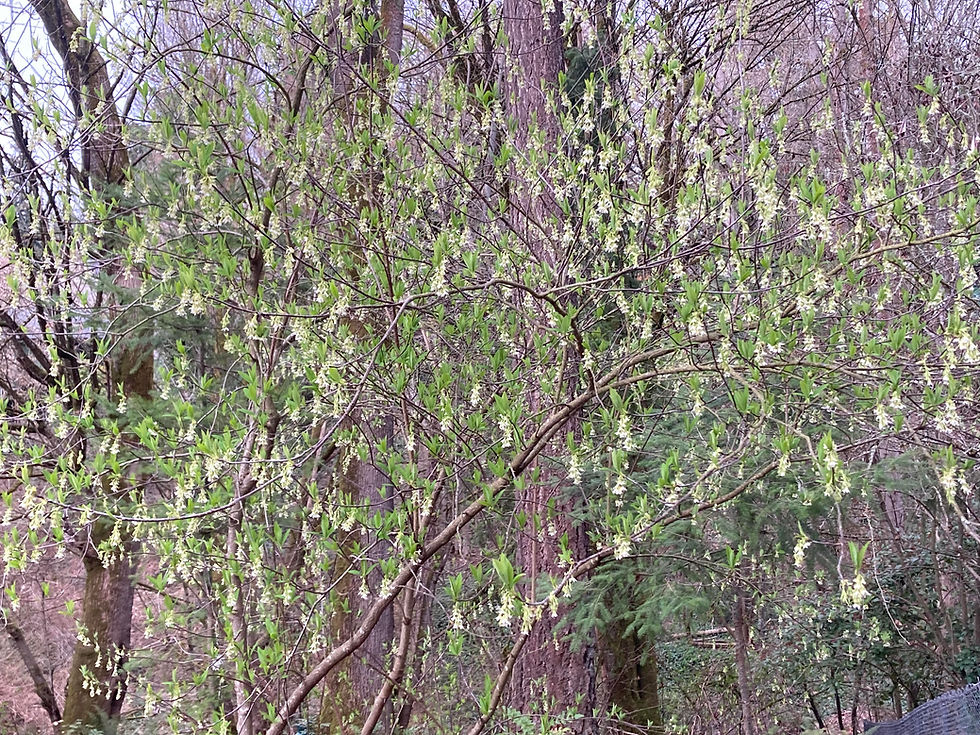
Using Osoberry for Early-Season Structure in Seattle and Camano Island Gardens
Osoberry (Oemleria cerasiformis) is often described as one of the earliest native shrubs to bloom in late winter. That’s true, but in Seattle and Camano Island garden design, its value goes beyond timing.
Osoberry is a valuable plant in Seattle and Camano Island garden design for early-season structure. It brings movement, light, and seasonal transition into the garden at a moment when most deciduous plants are still dormant. In well-designed landscapes, it helps carry the garden from winter into spring, supporting both ecological function and visual continuity.
In Seattle and Camano Island garden design, it is less about show and more about sequence, how a landscape unfolds through the seasons.
Osoberry is a fast-growing, multi-stemmed native shrub that plays an essential role in regional woodland ecology. Its early blooms nourish emerging pollinators, its summer fruit supports birds, and its airy structure softens transitions between cultivated and natural areas.
In designed landscapes, this ability to bridge structure and ecology is what makes osoberry so useful. It offers authenticity without demanding attention, allowing other elements of the garden to come forward while still supporting the overall composition.
What Osoberry Does in a Designed Landscape
Osoberry is rarely used as a focal plant. Instead, it plays a supporting role that is critical to how a garden feels in late winter and early spring, when structure matters most.
In my work, I use osoberry to:
Establish early seasonal presence
Create soft, naturalistic screening
Layer woodland edges and transitions
Support early pollinators
Connect planted areas to surrounding landscape
It is especially effective in ecological and naturalistic designs, where subtle seasonal shifts are part of the experience of the garden.
Botanical Description: Structure, Form, and Identity
Botanical Name: Oemleria cerasiformis
Common Names: Osoberry, Indian Plum
Size and Habit: Multi-stemmed deciduous shrub typically 6–15 feet tall and 6–12 feet wide, depending on light and soil. Growth is upright yet open, creating a woodland character rather than a dense hedge.
Native Range: Pacific Northwest, from British Columbia south to Northern California
Notable Characteristics:
Dioecious (separate male and female plants)
Pendulous, white, early-season flowers
Small purple fruit on female plants
Bright chartreuse spring foliage

Seasonal Interest: A Shrub that Signals Spring
Osoberry is one of the first shrubs to flower each year, often in February. It acts as a reliable early indicator of seasonal change, bringing movement and light into the garden when most plants are still dormant. Delicate white blossoms hang from bare stems, marking the transition from winter into spring.
Fresh Spring Growth New leaves emerge a vibrant chartreuse, creating a luminous backdrop against darker evergreens or woodland understories. This early flush of foliage sets the tone for spring in naturalistic plantings.
Fruit for Wildlife Female plants produce small drupes that ripen from green to purple. While understated visually, they provide important early-season food for robins, waxwings, towhees, and other songbirds.
Graceful Summer Structure Even as a deciduous shrub, osoberry maintains a soft, loose architecture through the growing season, blending well into layered ecological gardens.
Fun Fact: A Taste of Spring
Did you know? The earliest spring leaves of osoberry are edible and taste remarkably like fresh cucumber. Indigenous communities in the Pacific Northwest occasionally harvested these tender leaves as one of the first edible greens of the season.
While we do not generally recommend nibbling on garden plants, this detail offers a small glimpse into the cultural and seasonal rhythms of the region.
Ecological Value: Supporting Early Pollinators and Birds
Osoberry plays a keystone role in early-season habitat structures across our region. Its flowers appear when few others bloom, giving pollinators a rare food source. As a pioneer species, it establishes quickly on disturbed soils and forms part of the natural succession in woodlands and ravines.
Osoberry flowers are pollinated by hummingbirds, butterflies, native bees, and other insects. Its fruit, which resemble small plums, is eaten by birds such as cedar waxwings.
For residential landscapes in Seattle and Camano Island, osoberry helps connect cultivated spaces with nearby forest fragments. Its fruits feed birds, its structure offers cover, and its timing adds ecological rhythm to designed landscapes.
In design, plants like osoberry are less about visual impact and more about function within a system, supporting wildlife while contributing to the layered structure of the garden.

Growing Conditions: Light, Soil, and Water Needs
Light Prefers partial shade to full shade. It tolerates filtered sun but may show stress in hot, exposed settings.
Soil Thrives in a wide range of conditions. It adapts well to clay, loam, and sandy textures with minimal amendment, aligned with our design philosophy of working with existing soil rather than over-modifying it.
Water Requires supplemental water during establishment. Once rooted, it becomes drought-tolerant and completes much of its growth cycle before the dry season.
Hardiness Fully hardy in Seattle and Camano Island climates.
Design Uses: Where and How Osoberry Works
Osoberry works best when it is part of a layered planting rather than used in isolation.
It is most effective in naturalistic, woodland, and transition spaces where structure, seasonality, and ecological value matter.
Woodland Edges Softens boundaries between garden and forest, maintaining visual continuity while introducing early seasonal interest.
Shady Slopes and Ravines Performs well on slopes, adding texture and stabilizing soil in more naturalized conditions.
Pollinator-Forward Designs Provides one of the earliest nectar sources in the garden, supporting pollinator health before spring perennials emerge.
Understory Layering Pairs well with sword ferns, low Oregon grape, wild ginger, Pacific ninebark, and other native woodland species to create depth and seasonal progression.
Informal Screening and Transitions On larger properties, particularly on Camano Island, osoberry can be used for soft privacy planting where a natural look is preferred over formal hedging. In smaller Seattle gardens, it provides early vertical structure without adding heaviness, helping to balance tighter spaces.
What to Know Before Using Osoberry
Osoberry is not a formal shrub. It has a loose, airy habit and can sucker over time, which makes it best suited for naturalistic and ecological designs rather than structured or formal layouts. In more refined compositions, it is typically used as a background or transitional plant rather than a focal element.
Maintenance Notes
Requires minimal pruning; retain its natural, arching habit
Avoid unnecessary fertilizing, osoberry is adapted to lean soils
To ensure fruit production, include both male and female plants or source a known female if wildlife value is desired
Designing With Osoberry
A successful landscape relies on more than individual plants. It depends on how those plants work together over time.
Shrubs like osoberry form part of the early structural layer, helping a garden feel established while supporting seasonal progression. Its early flowers, luminous spring foliage, and wildlife value allow it to carry a landscape through the transition from winter into spring.
In Seattle and Camano Island landscapes, osoberry reflects the character of this region. It bridges cultivated and natural areas and supports the ecological rhythms that define place.
It is not a plant that demands attention. It is one that helps a garden feel like it belongs.
We invite you to explore landscape design services in Seattle and Camano Island.

kèo nhà cái mình thấy dạo này nhiều người nhắc nên cũng tò mò bấm vào xem thử giao diện thế nào. Mình không có ngồi soi từng nội dung đâu, chủ yếu lướt qua để xem họ sắp xếp trang có dễ nhìn không. Cảm giác đầu tiên là bố cục khá thoáng, các mục được gom theo nhóm rõ ràng nên kéo xuống không bị “ngợp” chữ. Mình thích kiểu họ trình bày thông tin theo dạng khối và bảng cột gọn gàng, nhìn cái là nắm được ý chính chứ không phải đọc dài dòng. Menu cũng để chỗ dễ thấy, bấm qua lại giữa các phần khá mượt, không phải tìm vòng vòng. Nói chung lướt…
Bài viết đọc thú vị và dễ theo dõi, cảm ơn bạn đã chia sẻ. Bạn mình gửi link bài này nên mình vào xem, đúng kiểu mình hay để ý cách các nền tảng giải trí online sắp xếp giao diện và trình bày dữ liệu hơn là soi từng trò. Mình cũng gom mấy ghi chú quan sát bố cục, menu, bảng cột vào một trang riêng cho tiện, ai cần thì ghé xem https://support.bitspower.com/support/user/Soicauxsmbpro