
Plant Profile: Gaura (Oenothera lindheimeri)

Updated: Oct 6, 2025
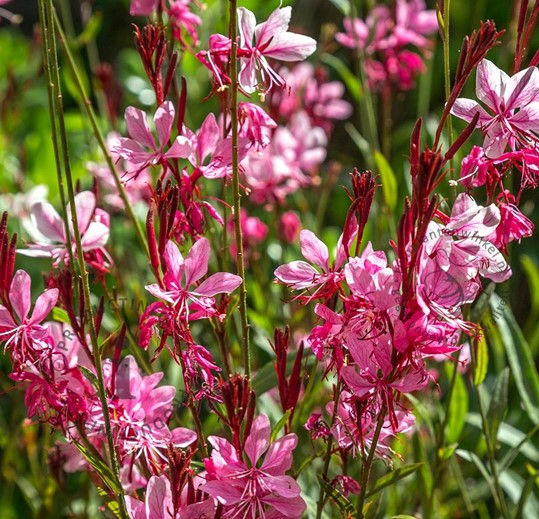
Plant Profile: Gaura (Oenothera lindheimeri)
Description
Gaura, also called Wandflower or Whirling Butterflies, is a perennial with an airy, delicate form. Its tall, wiry stems carry clouds of fluttering pink or white flowers from late spring into fall, often right up to frost. In bloom, it gives the impression of a cloud of butterflies hovering above the foliage.
Ideal Uses
Long-season bloom filler in mixed borders
Cottage and meadow-style plantings
Pairs beautifully with grasses and echinacea
Great for pollinator gardens
Plant Profile
Botanical Name: Oenothera lindheimeri (formerly Gaura lindheimeri)
Common Names: Gaura, Wandflower, Whirling Butterflies
Type: Herbaceous perennial (short-lived, often 3–5 years)
Height/Spread: 2–4 ft tall, 2–3 ft wide
Bloom Time: Late spring through frost
Flowers: White, pink, or bicolored; 1 in., starry, borne on airy stems
Foliage: Narrow green to reddish leaves
Hardiness: USDA zones 5–9
Sun: Full sun (tolerates light shade, fewer blooms)
Soil: Well-drained; thrives in lean, sandy soils
Maintenance Tips
Deadhead lightly to keep it tidy, but continuous bloom requires little effort
Shear back midseason if plants get floppy
Avoid rich soil and overwatering, which cause sprawling growth
Cut back hard in late fall or early spring
Design Notes
Gaura is best used in loose, naturalistic designs where its airy stems can sway with the wind. It adds movement, lightness, and a continuous flower show that ties plantings together across the seasons. Works especially well with ornamental grasses, salvias, rudbeckia, and echinacea.
Ecological Notes
Attracts butterflies, bees, and hoverflies for months on end
Provides nectar well into the fall when many plants are done
Deer-resistant due to tough foliage
Cautions
Short-lived perennial, often best treated as a 3–5 year plant
Can self-seed lightly in lean soils


Comments