
Song of Spring: Spring Garden Sound in Seattle, the Eastside, and Camano Island

A well-designed garden is not silent. It has a soundtrack.

The First Music of the Garden
Before most plants leaf out, the garden begins to sing.
In Seattle, across the Eastside, and on Camano Island, the earliest weeks of spring arrive not only through bloom but through sound. Songbirds begin establishing territory, frogs call from wet areas, and the first bees move through emerging flowers. Long before a garden reaches visual fullness, it is already alive with rhythm and voice.
Designing with this awareness creates landscapes that feel layered and immersive. Sound adds dimension, movement, and seasonality in ways that purely visual design cannot.
A well-designed garden is not silent. It has a soundtrack.
This is the essence of spring garden sound in the Salish Sea region — a landscape experienced not just through sight, but through the presence of life.
The Birds That Announce Spring
One of the most recognizable early singers in the region is the Black-capped Chickadee. Their clear, whistled notes begin to ring out as the days lengthen. These small birds are already inspecting nesting cavities in trees, snags, or birdhouses.
The Pacific Wren contributes a very different voice. Despite its tiny size, its cascading song carries astonishing distance through woodland gardens and hedgerows.
But these songs are not simply background sound. They are signals.
In early spring, most of what we hear is territorial declaration. Male birds establish and defend space through song, broadcasting both presence and fitness. A strong, consistent song tells other males to keep their distance while also attracting a mate.
Different species express this in different ways:
Song Sparrow — delivers a structured, repeated phrase, often from an exposed perch
Dark-eyed Junco — produces softer, trilling songs from woodland edges
Spotted Towhee — sings from within dense shrubs, its bright “drink-your-tea” call emerging from cover
There are also quieter, more conversational sounds woven between these declarations.
Chickadees use a complex range of calls beyond their familiar whistle—subtle notes that communicate alert, proximity, and cohesion within a flock.
As the season progresses, the soundscape begins to change. Territorial songs become less constant, replaced by shorter, more intimate calls between mates and the rising activity of feeding young.
In one garden, a pair of Dark-eyed Junco nested nearby, revealing an entirely different layer of sound. When the adults approached with food, the nestlings erupted into a rapid, electric buzzing—an urgent, almost insect-like vibration that pulsed through the planting. It was not a song meant to carry across distance, but a concentrated signal of need, audible only if you were close enough to notice.
These quieter sounds are part of the same system. They tell us not just that birds are present, but that the garden is supporting life through its most vulnerable stages.
Paying attention to birds means paying attention to what they require to stay. Song is only the visible edge of a much larger system. Birds need structure for territory, shelter for protection, and a reliable source of food throughout the season.
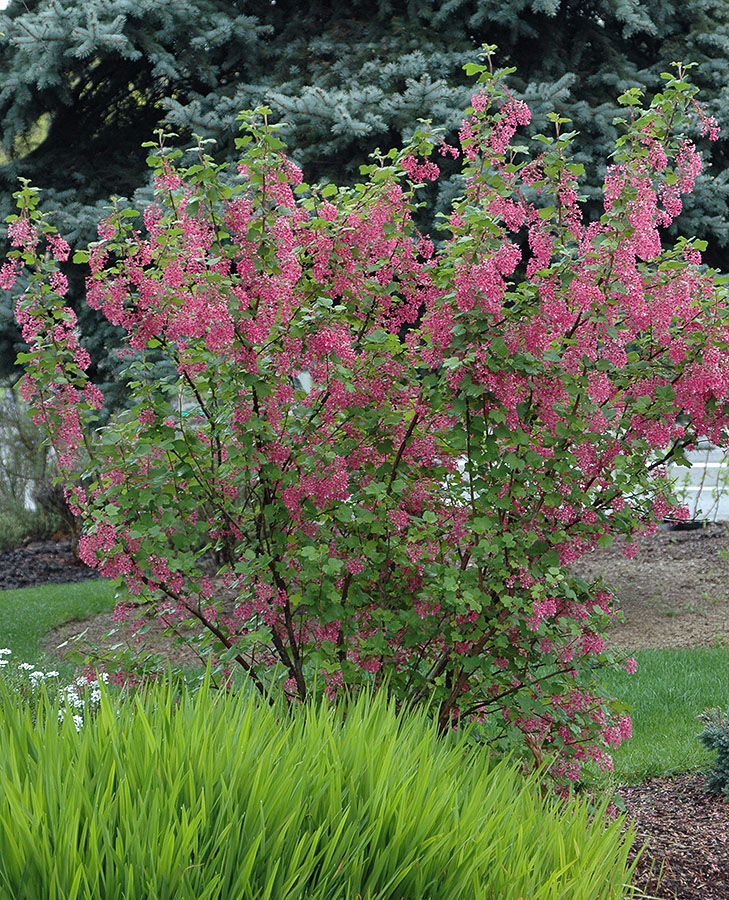
Gardens that support them well include layered planting—trees for perching and nesting, mid-level shrubs for cover, and ground-level density where insects thrive. Early-season plants such as Red-flowering Currant (Ribes sanguineum) and Osoberry (Oemleria cerasiformis) help sustain both birds and the insects they depend on.
Avoiding insecticides and pesticides is also part of supporting this system. Many birds rely on insects—especially caterpillars—as a primary food source during nesting season. Species such as the Black-capped Chickadee require thousands of caterpillars to raise a single brood, making insect life essential, not incidental. Let birds take care of the insects instead.
Even small reductions in insect populations can limit a garden’s ability to support breeding birds. A leaf that has been nibbled is often a sign that the garden is functioning as intended. In most cases, this kind of damage is temporary and localized, while the ecological benefit is significant.
When these needs are met, birds do more than pass through. They establish territory, raise young, and return year after year. And with them, the sound of the garden becomes fuller, more varied, and more continuous.

Insects and Amphibians Join the Chorus
Spring sound is not only birds.
The Pacific Chorus Frog begins calling from wetlands, rain gardens, and seasonal pools. Their rhythmic evening calls can carry across a landscape, signaling that winter has released its hold.
Insects contribute as well. Bumblebee queens emerging from winter dormancy produce a low, resonant hum as they forage among early flowers such as Ribes sanguineum and Camassia quamash.
These sounds are indicators. A garden with insect life and amphibians is a garden with functioning habitat. As ecological richness increases, so does the depth and variation of sound.
Gardening for wildlife does not just change what we see. It changes what we hear.
Designing With Sound in Mind
Garden sound can be shaped through design.
Plant selection is foundational. Trees and shrubs create nesting and feeding habitat that draws birds into the garden. Dense plantings—currant, osoberry, evergreen huckleberry—offer the protection birds need to settle, feed, and sing.
Water introduces another layer. A small fountain or water feature creates a consistent background tone, softening urban noise while attracting birds that come to drink and bathe.
Even wind becomes part of the composition. Grasses and fine-textured foliage move with air currents, creating a subtle, shifting soundscape that changes throughout the day.
These elements work together to create a garden that feels active and inhabited, even in early spring when visual cues are still emerging.
This is what defines spring garden sound in Seattle, the Eastside, and Camano Island—gardens shaped not just for how they look, but for how they function and how they are experienced.
Designing Gardens That Invite the Song of Spring
When people think about landscape design, they often focus on color, form, and bloom sequence. But sound is part of what makes a garden feel immersive and memorable.
By designing with habitat, water, and layered planting, we create spaces where birds return, insects thrive, and the first music of spring becomes part of everyday life.
A garden that sings is a garden that is working.
If you are planning a landscape in Seattle, the Eastside, or on Camano Island, thoughtful planting and habitat design can create outdoor spaces that are visually compelling while also supporting the wildlife that brings these seasonal voices.

Learn (and Hear) More
Copyright © 2026 Lakamas Landscape Design.
All text and photographs are the property of Lakamas Landscape Design unless
otherwise credited.

Comments