
Early Spring Bloom Sequencing in Seattle and Camano Island Gardens

How Landscape Designers Think About Early Spring Bloom Sequencing

In well-designed landscapes, the arrival of spring rarely happens all at once. Instead, it unfolds through a sequence of plants that bloom in succession, gradually shifting the garden from winter dormancy toward the abundance of the growing season.
Landscape designers often think in terms of bloom sequencing, arranging plants so that one species comes into flower as another begins to fade. This creates continuity in the garden and ensures that seasonal change feels intentional rather than abrupt.
In the maritime climate of Seattle and Camano Island, several native plants mark the beginning of this progression each year. Among the earliest are red-flowering currant (Ribes sanguineum), osoberry (Oemleria cerasiformis), bitter cherry (Prunus emarginata), and woodland perennials such as trout lily (Erythronium). All of these plants are native to the region and play an important role in both the seasonal character and ecological function of Pacific Northwest landscapes.
In the landscapes we design, these early bloomers are often the first plants to signal that the garden season has begun.
Early Spring Blooming Plants in Seattle and Camano Island
The early stages of spring in the Pacific Northwest are often marked by a small group of native plants that bloom before the landscape fully leafs out. Gardeners searching for early spring blooming plants Seattle Camano Island landscapes rely on often discover that many of the most important species are native shrubs and small trees.
Plants such as red-flowering currant, osoberry, and bitter cherry create the first visible shift from winter dormancy toward spring growth. These species provide color, structure, and nectar resources at a time when the garden is just beginning to awaken.
Red-Flowering Currant Begins the Season
Red-flowering currant (Ribes sanguineum) is often one of the first native shrubs to begin blooming in Seattle and on Camano Island. In many gardens the earliest blossoms appear in February, well before most shrubs have leafed out.
By early March, the arching branches can be covered in pendant clusters of rose-pink flowers. At this stage the garden may still appear largely dormant, which makes the activity around these blooms especially noticeable. Anna’s hummingbirds frequently visit red-flowering currant as soon as the flowers open.
For landscape designers, this shrub plays an important role in establishing the first visible activity of the season. Its graceful form works well along woodland edges, in mixed shrub borders, and in naturalistic plantings where early color and wildlife support are both important.
Osoberry Signals the Seasonal Shift
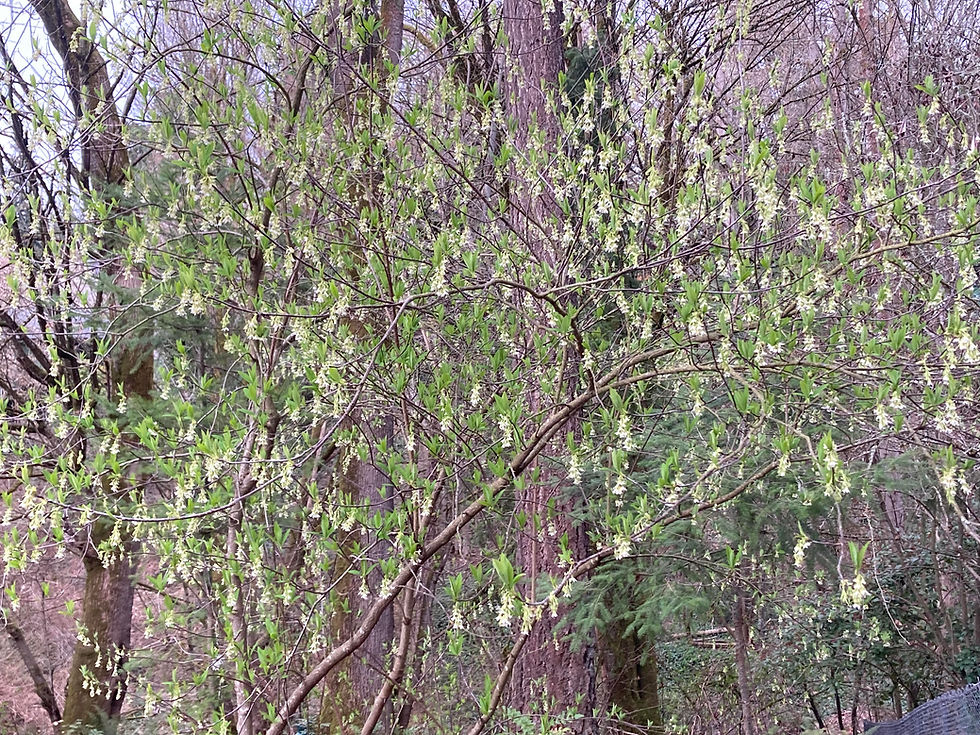
Shortly after red-flowering currant reaches its stride, osoberry (Oemleria cerasiformis) begins to flower.
Slender racemes of small white blossoms appear along the branches, sometimes emerging quite suddenly over the course of a few days. When osoberry comes into bloom, the seasonal transition toward spring becomes unmistakable.
This native shrub is particularly valuable in ecological landscapes. It provides early nectar for insects and later in the season produces small fruits that birds readily consume. Osoberry is also a host plant for the pale swallowtail butterfly, adding another layer of ecological benefit.
In landscape design, osoberry works beautifully along woodland edges and within layered plantings where its delicate flowers bring a lightness to early spring compositions.

Bitter Cherry Adds the Canopy Layer
As the early shrub layer continues blooming, bitter cherry (Prunus emarginata) begins to flower.
In early spring its branches are covered in delicate white blossoms that brighten woodland margins and native planting areas. Because bitter cherry flowers slightly later than the earliest shrubs, it helps extend the bloom sequence upward into the small tree canopy.
In landscape design, incorporating native trees such as bitter cherry allows seasonal interest to move vertically through the garden, creating depth and rhythm as the season progresses.
Trout Lily and the Woodland Garden Layer
While shrubs and small trees begin flowering above, another part of the garden is also beginning to stir at ground level. Woodland perennials such as trout lily (Erythronium) emerge early in the season, sending up distinctive mottled leaves that resemble the patterning of a trout’s back.
These plants are among the classic spring ephemerals of Pacific Northwest forests. Their flowers appear shortly after the leaves emerge, typically in soft shades of cream or pale yellow. As the tree canopy fills in later in spring, the plants gradually retreat back into dormancy.
Because of this growth cycle, trout lilies are particularly well suited to woodland-style gardens and shaded planting areas where they can take advantage of early-season light.
For landscape designers, plants such as Erythronium add an important ground layer to early spring bloom sequencing. While shrubs like red-flowering currant and osoberry provide structure and vertical presence, woodland perennials bring seasonal interest closer to the ground, enriching the composition of the garden.

Why Bloom Sequencing Matters in Landscape Design
In thoughtfully designed landscapes, plants are rarely selected for a single moment of peak bloom. Instead, designers arrange species so that the garden evolves steadily over time.
Early spring bloomers such as red-flowering currant, osoberry, bitter cherry, and trout lily form the opening movement of this seasonal progression. Together they provide color, structure, and ecological resources at a time when many landscapes still appear dormant.
Because these plants are native to the region, they also support pollinators and birds that rely on early nectar sources and habitat.
Observing the Season Unfold
Watching these early bloomers appear across the Maritime Northwest is one of the most reliable ways to track the arrival of spring. As the weeks progress, additional native plants such as camas, trilliums, and other woodland perennials will join the display, continuing the sequence of bloom that carries the landscape into late spring.
Understanding these seasonal patterns is an important part of designing gardens that feel dynamic throughout the year while supporting the wildlife that shares these landscapes.
Designing Landscapes That Evolve Through the Seasons
A well-designed garden is rarely defined by a single moment of peak bloom. Instead, it unfolds gradually through the year, with each season building on the one before it.
Early spring bloomers such as red-flowering currant, osoberry, bitter cherry, and trout lily represent the opening movement of that seasonal sequence. When thoughtfully incorporated into a landscape, these native plants bring color and structure to the garden while also supporting pollinators, birds, and other wildlife that depend on early nectar sources.
At Lakamas Landscape Design, we approach each project with this kind of seasonal rhythm in mind, creating landscapes that feel dynamic throughout the year while reflecting the ecological character of the region.
If you are considering a landscape project in Seattle, on the Eastside, in the communities north of the city, or on Camano Island, we invite you to learn more about our landscape design services.


Comments