
Hamamelis ‘Diane’ Witch Hazel Seattle and Camano Island

Updated: Feb 25

Late-Winter Structure and Color in Seattle and Camano Island Gardens
‘Diane’ witch hazel (Hamamelis × intermedia ‘Diane’) is a valuable shrub for late-winter interest in Seattle and Camano Island gardens. Blooming from January through March, its copper-red, ribbon-like flowers appear along bare branches when most of the landscape is still dormant. This early display provides both seasonal structure and one of the first nectar sources for pollinators, making it an important component of wildlife-supportive planting.
In the Pacific Northwest climate, late winter is often defined by muted tones and limited floral interest. Witch hazel fills that gap with a refined, textural bloom that is best appreciated at close range. Placed intentionally, it becomes part of a layered seasonal composition rather than a single moment of color.
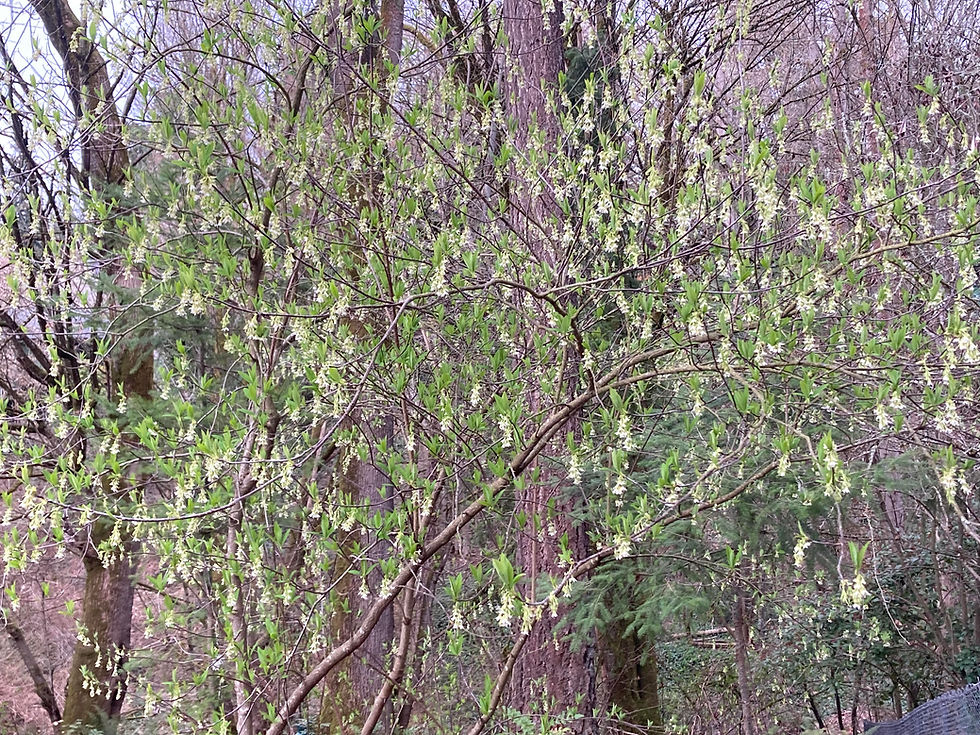
This same early-season window can be extended with plants such as Ribes sanguineum (flowering currant) and Oemleria cerasiformis (Osoberry), allowing the landscape to transition gradually from winter into spring while supporting emerging pollinators.
Where It Works
As a focal shrub or small tree in winter-forward compositions
In layered borders where structure carries the design through multiple seasons
Near entries or paths where late-winter bloom can be experienced up close
At the edge of woodland or naturalistic plantings
As part of a composition that relies on seasonal progression rather than peak bloom

Blooms have yellow tips that darken to orange then red, with a dark center
Plant Profile
Type: Deciduous shrub or small tree
Height & Spread: 8–12 ft tall, 8–12 ft wide
Flowers: Copper-red to deep red, lightly fragrant (January–March in Seattle)
Foliage: Green, turning orange, scarlet, and burgundy in fall
Exposure: Full sun to part shade
Soil: Moist, well-drained, slightly acidic to neutral
Hardiness: USDA Zones 5–9
Maintenance
Prefers consistent moisture, particularly during establishment
Best flowering occurs in full sun, though part shade is tolerated
Prune lightly after flowering to maintain form
Avoid heavy pruning, which reduces bloom potential
Mulch to regulate soil moisture and protect shallow roots
Design Notes
‘Diane’ is most effective when it is given a backdrop.
Dark evergreens, conifers, or shaded woodland edges allow the flowers to read clearly in winter light. Because the bloom is textural rather than bold, it should be placed where it can be encountered rather than viewed from a distance.
Pairing with early-season bulbs such as snowdrops, crocus, and hellebores extends interest at ground level, while the shrub provides vertical structure. Combined with other early bloomers such as flowering currant and Osoberry, it helps create a continuous sequence of bloom and ecological function at the beginning of the season.
Its strong fall color allows it to serve as a seasonal anchor, contributing to both early- and late-season composition.
Ecological Value
Provides one of the earliest nectar sources for pollinators in late winter
Supports emerging insects when few other resources are available
Dense branching offers cover for birds
Considerations
Shallow roots can be sensitive to drying and exposure
Benefits from a protected location out of strong wind
Does not tolerate prolonged drought without supplemental water
Explore More
Explore more early-season planting strategies in our Natives and Nativars and Wildlife by Design posts.
Lakamas | Wildlife by Design
A landscape that performs in late winter has been intentionally designed, not left to chance.

Mình hay xem soi cầu XSMB với soi cầu MB mỗi ngày để kịp cập nhật trước giờ quay số, coi như thêm góc nhìn cho yên tâm. Ngoài việc đọc dự đoán XSMB, mình còn để ý thống kê lô gan và lô xiên để nhìn ra nhịp xuất hiện của vài bộ số quen. Thỉnh thoảng anh em trong nhóm cũng nhắc tới mấy công cụ như quay thử XSMB, Rồng Bạch Kim và dữ liệu lịch sử, vì dựa vào tần suất thực tế nên dễ soi lại cho rõ hơn. Mình cũng có ghé soicauxsmb.pro ở giữa quá trình tham khảo, chủ yếu để đối chiếu thêm chứ không kỳ vọng gì quá. Nói chung dự…
Mình chơi xổ số kiểu cho vui là chính, coi như giải trí nên không đặt nặng chuyện phải trúng. Trước đây nghe người ta bàn đủ thứ “cầu kèo” các kiểu, mình cũng tò mò thử tìm hiểu nhưng lúc đó mơ hồ lắm. Theo dõi một thời gian thì mình nhận ra có vài dạng hay lặp lại, nên mỗi lần đọc nhận định mình thường ghi lại vài ý ngắn rồi chờ kết quả để đối chiếu, xem có phải mình đang tự ám thị không. Dạo gần đây mình có ghé https://soicauxsmb.io/dan-de-36-so-khung-3-ngay.html để tham khảo thêm cho đỡ chán. Có bữa trúng được chút thì vui, nhưng cũng không ít lần lệch xa nên mình luôn…