
Winter Garden Natives: Evergreen Structure for the Seattle and Camano Island Landscape
- Jonna Semke

- Dec 2
- 4 min read
Part 5 of the Lakamas Winter Design Series
Winter reveals the true bones of a landscape. In Seattle and Camano Island, where soft light and cool, wet soils define the season, native evergreens bring essential structure, texture, and ecological function. Thoughtfully chosen evergreen shrubs and groundcovers create a layered, winter-ready framework that feels deeply tied to the region.
Below is a focused look at native evergreen shrubs and groundcovers—organized by size and function—that bring beauty and resilience to winter gardens without overwhelming residential spaces.
Large Evergreen Shrubs: The Structural Backbone
These shrubs offer the height, mass, and evergreen presence that anchor winter plantings in small and mid-sized gardens.
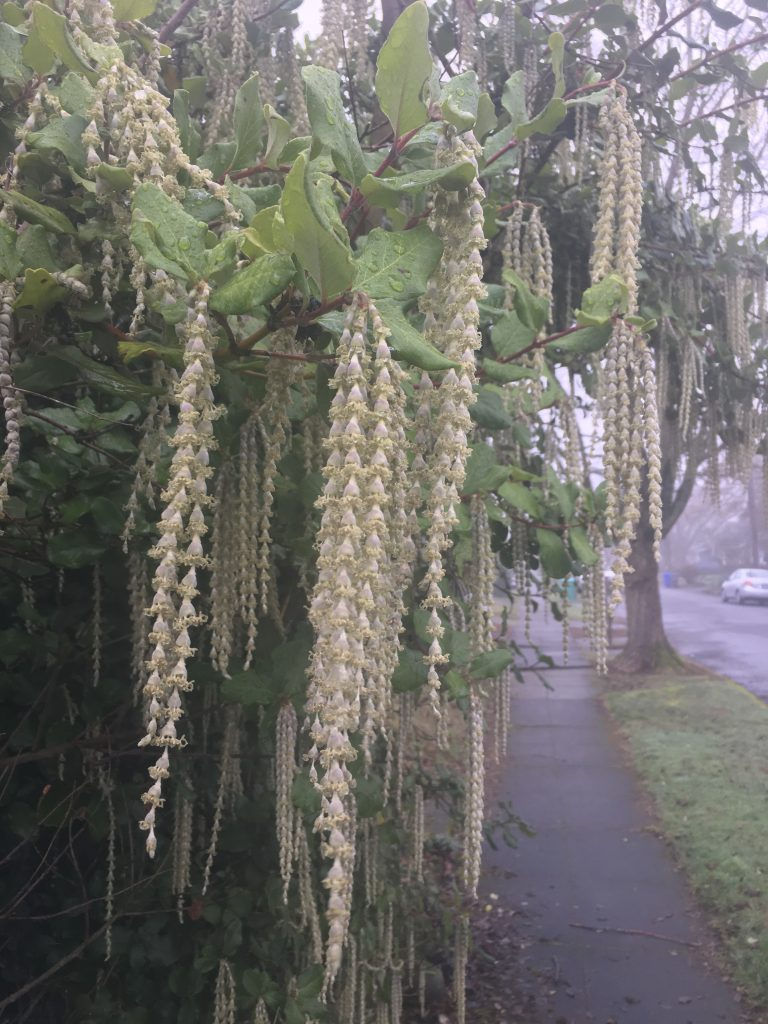
Silktassel ‘James Roof’ (Garrya elliptica ‘James Roof’)
A naturally occurring variant, ‘James Roof’ is a selected form of the West Coast’s native silktassel, chosen for its long, elegant catkins and compact, garden-friendly habit. The straight species can grow far too large for most residential landscapes, sometimes reaching a small-tree scale. In contrast, ‘James Roof’ typically matures around 6–10 feet tall and up to 10 feet wide, making it well suited to smaller properties in Seattle and Camano Island. Its evergreen leaves provide year-round structure, and the dramatic winter catkins add distinctive seasonal interest. While wind-pollinated and not a nectar source, its dense foliage offers excellent winter shelter and nesting cover for small birds.
Pacific Rhododendron (Rhododendron macrophyllum)
Our state flower provides a strong evergreen framework through winter. Its broad, matte leaves create calm, architectural planes that balance finer textures in the garden. Pacific rhododendron feels especially at home in lightly shaded, woodland-inspired plantings, offering a sense of quiet permanence. And when it blooms in the spring, it is full of stunning pink blossoms.
Tall Oregon Grape (Mahonia aquifolium)
This standout broadleaf evergreen brings glossy foliage that shifts to bronzy or reddish tones in cold weather. In late winter, bright yellow flowers appear—an essential nectar source for early pollinators and Anna’s hummingbirds. As a structural shrub, it anchors winter compositions while supporting ecological diversity.
Arctostaphylos (Manzanita) — Selected Native Species
An iconic Western evergreen shrub, Arctostaphylos brings sculptural winter presence with its smooth, mahogany bark and sinuous branching. Several native species and regional selections remain compact enough for residential landscapes in Seattle and Camano Island, thriving where drainage is excellent and soils stay lean. In winter gardens, manzanita’s evergreen leaves, architectural form, and soft winter bloom (on select species) add quiet elegance and year-round habitat value. It pairs beautifully with grasses, Mahonia, and dry-site natives. It is more of a southern Oregon or California native, but with it's stunning exfoliating, cinnamon or merlot colored bark, it is a great option for us in the more northern part of the country.
Small Evergreen Shrubs: Texture, Depth, and Seasonal Continuity
These smaller shrubs create the middle layer of the winter garden, bridging tall structural plants with the groundplane.
Cascade Oregon Grape (Mahonia nervosa)
A low, layered native shrub ideal for dry shade and under conifers. Its tiered leaf structure and rich winter color create depth in winter plantings, making it an excellent connector between cultivated and natural spaces.
Salal (Gaultheria shallon)
One of the most adaptable and reliable native evergreens. Its leathery leaves hold beautifully through winter storms, forming a dense, unifying layer from sunlit openings to deep shade. In winter compositions, salal provides continuity between more expressive shrubs.
Western Sword Fern (Polystichum munitum)
Though not a shrub botanically, sword fern functions like one in winter design. Its persistent evergreen fronds supply fine texture and structure when much of the garden is dormant. It softens transitions, stabilizes slopes, and brings woodland texture into cultivated spaces.
Groundcovers: The Winter Carpet
Groundcovers knit the winter garden together, filling the spaces left bare when perennials die back, keeping the landscape visually cohesive.
Wild Ginger (Asarum caudatum)
A superb evergreen for deep shade and to part sun. Its heart-shaped leaves remain full through winter, creating a lush, grounding layer beneath taller shrubs. It blooms in early spring with maroon, hard to spot flowers, and digging around this plant any time of year is a pleasure, as it exudes a delicious ginger scent.
Penstemon cardwellii
A graceful evergreen subshrub native to rocky slopes. Its small, glossy leaves form soft winter mats that brighten quiet corners and thrive in well-drained soils. In winter, it adds subtle structure and texture without requiring much space.
Coastal Strawberry (Fragaria chiloensis)
A hardy, evergreen groundcover native to coastal bluffs—ideal for Camano Island and sunny pockets in Seattle. It spreads gently, stays green all winter, and offers both erosion control and early-season pollinator support.
Designing With Native Evergreens in Winter
A successful winter garden uses layering to build depth and coherence:
Large shrubs provide the backbone, giving structure and enclosure.
Small shrubs add density and mid-layer interest, forming the essential bridge between tall and low elements.
Groundcovers fill winter gaps, maintaining continuity when herbaceous layers retreat.
Together, these species create resilient, expressive winter gardens rooted in the character of Seattle and Camano Island—gardens that remain engaging, textural, and ecologically supportive even in the quietest season.
At Lakamas Landscape Design, we specialize in creating naturalistic, ecologically grounded gardens that feel at home in Seattle and Camano Island. If you’re planning a new landscape or considering a winter renovation, we welcome you to reach out. We would be glad to help you shape a garden that thrives across all seasons.
Comments